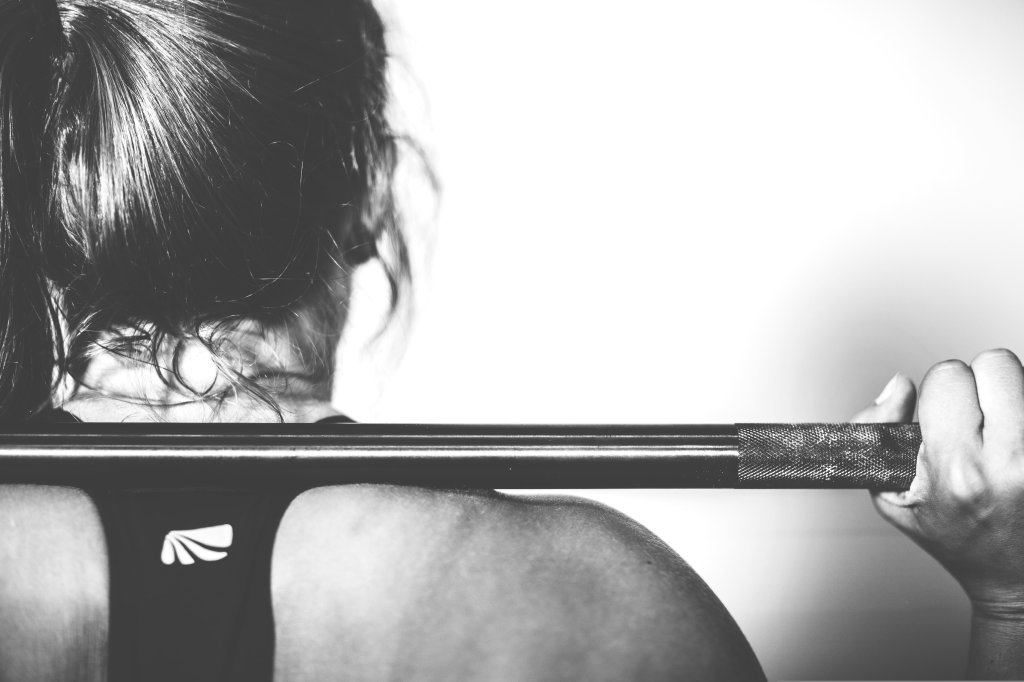
A busy woman’s honest take on muscle, midlife, motherhood and feeling powerful again.
I used to think strength training was for people who already knew what they were doing: people who understood gym equipment, had perfect technique and somehow found spare hours in the week. As a busy woman and mum, it felt like one more thing I did not have time for. But nine months ago, I started as a complete beginner. I was nervous, unsure and far outside my comfort zone. Now, the results are honestly mind-blowing, not only physically, but mentally too.
My body feels stronger, more capable and more energised. My posture has changed. My confidence has changed. Even the way I carry myself through stressful days has changed. And while I definitely do not have a six-pack yet, I do feel stronger, which feels far more useful in real life. That is why I now believe strength training is not just a fitness trend for women; it is a necessity.
That realisation has also changed how I think about ageing. Strength training no longer feels like something I am doing only for how I look or how I feel today; it feels like something I am doing for the older version of myself too.
This has become even more personal for me because of my mum, who is now in her late 70s. She came from a generation where women were rarely encouraged to go to the gym or make strength training a priority. Exercise was not made easy for her, and it was never a priority because life was already so full. She worked full time, looked after me and my brother, and carried so much of the responsibility for the whole household.
Now, seeing her struggle is heartbreaking. It is not only difficult for her to climb steps; some days, even leaving the house feels like a huge challenge. Seeing her rely on painkillers to help soothe the pain in her legs has made me realise how much our muscles, joints and bones affect our freedom. It has shown me that strength is not just about fitness or appearance; it is about independence, dignity and quality of life.
What Happens When We Do Not Strengthen Our Muscles?
When we do not challenge our muscles, we gradually lose strength, power, balance and resilience. Everyday things can start to feel harder: carrying shopping bags, lifting children, climbing stairs, moving furniture, getting up from the floor or recovering after injury. This loss does not happen overnight, which is why it is easy to ignore, until one day we realise we feel weaker than we used to.
Muscle mass naturally declines with age, and hormonal changes around perimenopause and menopause can accelerate that process. Less muscle can mean a lower resting metabolic rate, reduced insulin sensitivity, more fatigue, poorer joint support and a greater risk of falls or frailty later in life. In simple terms: muscle is not just about looking toned. It is active, protective tissue that helps us move well, burn energy, support our joints and stay independent.
There is also the bone health piece. Bones respond to load. When we lift, push, pull and carry resistance, we give bones the stimulus they need to stay strong. Without that stimulus, especially as estrogen levels change, bone density can decline, increasing the risk of osteopenia, osteoporosis and fractures. Weight-bearing and resistance exercise are among the most powerful lifestyle tools we have for protecting skeletal health.
What Dr Vonda Wright’s Work Adds to the Conversation
Orthopaedic surgeon and women’s health advocate Dr Vonda Wright has helped bring attention to what she describes as the musculoskeletal impact of menopause: changes in muscle, bone, joints, tendons and connective tissue that many women experience but are not always warned about. Her message is empowering rather than frightening: decline is not inevitable if we train, fuel and care for our bodies with intention.
One of her most important points is that muscle is deeply connected to longevity. Strong muscles help protect metabolism, balance, mobility, joints, bones and even brain health. Dr Wright often encourages women to stop thinking only about weight on the scale and start thinking about strength, lean muscle and the ability to live actively for decades to come.
I find Dr Wright’s perspective powerful because it completely reframes training. It is not punishment for eating cake. It is not about shrinking ourselves. It is about building a body that can carry us through motherhood, work, stress, hormones, ageing and life.
The Key Benefits of Strength Training for Women
- More muscle means more energy burned at rest. Muscle tissue is metabolically active, so increasing lean muscle can support a healthier resting metabolic rate.
- Better bone density and fracture prevention. Resistance training places healthy stress on bones, helping them stay stronger over time.
- Improved hormonal and metabolic health. Strength training can support insulin sensitivity, blood sugar regulation, body composition and resilience through hormonal transitions.
- Better posture, balance and joint support. Strong muscles support the skeleton and can make everyday movement feel easier.
- Mental strength and confidence. There is something powerful about lifting a weight you could not lift before. It changes how you see yourself.
- Protection for future independence. Strength now is an investment in being able to travel, play, work, move and live well later.
How Often Is Enough?
The good news for busy women is that you do not need to live in the gym. Public health guidance recommends muscle-strengthening activities on at least two days per week, working all major muscle groups. That means two well-planned sessions can be enough to start seeing meaningful benefits when done consistently.
For many working mums, that is a game changer. Two sessions a week feels possible. It can be two gym classes, two personal training sessions, two home workouts with dumbbells, or one class and one gym session. The key is consistency, progressive challenge and good technique, not perfection.
How to Start If You Are Completely New
- Book a beginner-friendly class. A structured class removes the guesswork and helps you learn basic movements.
- Try a few personal training sessions. Even a short block with a qualified PT can teach you technique, confidence and how to use equipment safely.
- Find a workout buddy. Accountability makes a huge difference, especially when life is busy and motivation dips.
- Start lighter than your ego wants. Technique first, then gradually increase the weight.
- Focus on simple movement patterns. Squat, hinge, push, pull, carry and core work will take you a long way.
- Schedule it like a meeting. If it is not in the diary, it is too easy for everyone else’s needs to come first.
For me personally, what made it easier was starting with personal training sessions in a women-only gym, then continuing with a regular membership afterwards. The gym I go to focuses on strength training and small group classes, which made the whole experience feel far less intimidating. Over time, it began to feel like I belonged to a small, like-minded community. I have made friends there, and I genuinely look forward to going now. But that is just my personal experience; the most important thing is to find what works for you.
What I Wish More Women Knew Before They Start
Strength training is powerful, but it works best when we support it properly. One of the biggest lessons I have learned is that muscle does not build from training alone. We also need enough food, enough protein and enough recovery. Busy women are often brilliant at looking after everyone else, but we can be terrible at fuelling ourselves properly.
Protein matters because it gives the body the building blocks it needs to repair and grow muscle. Recovery matters because muscles get stronger after training, not during the workout itself. Sleep, rest days and listening to the body are not signs of weakness; they are part of the process.
Another important point is progressive overload. This simply means gradually giving your body a little more challenge over time: a slightly heavier weight, an extra repetition, better control, or a more confident movement. You do not need to rush. You just need to keep gently progressing.
I also wish more women knew that lifting weights does not automatically make you bulky. For most of us, strength training is not about becoming a bodybuilder. It is about becoming stronger, more capable, more energised and more confident in our own bodies.
My Biggest Lesson After Nine Months
I started because I wanted to feel fitter and stronger. What I did not expect was how much strength training would change my mind. I feel calmer, more capable, more confident and more connected to my body. I no longer see exercise as something I have to squeeze in because I should. I see it as something that gives me back to myself.
And perhaps most importantly: it is never too late to start, but it is also never too early to protect your future self. Book the class, pick up the dumbbells, ask for help, take a friend with you, but do not wait until strength becomes something you wish you had protected sooner.
So for every woman who feels too busy, too tired, too inexperienced or too intimidated to begin: start small, but start. Two sessions a week can be enough to build momentum. Your muscles, bones, hormones, metabolism and future self will thank you.
Note: If you have an injury, medical condition, osteoporosis, are pregnant or recently postpartum, speak with a qualified healthcare professional before starting a new training programme.





 Elegant Wellbeing